Why pre-seed investing is about more than capital
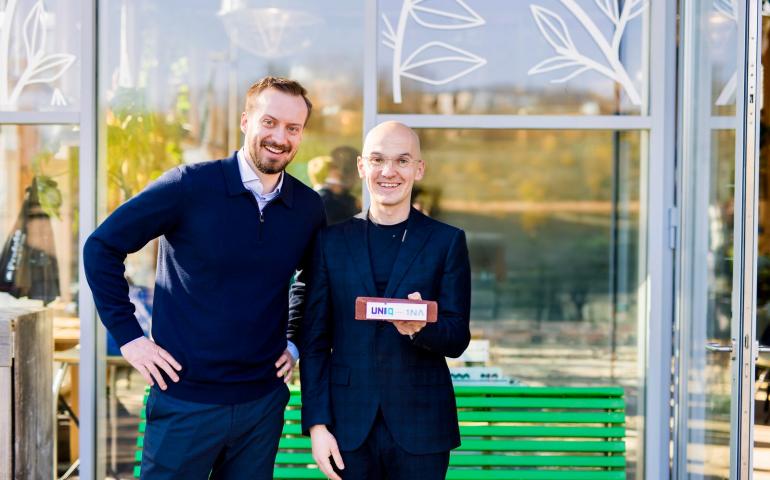
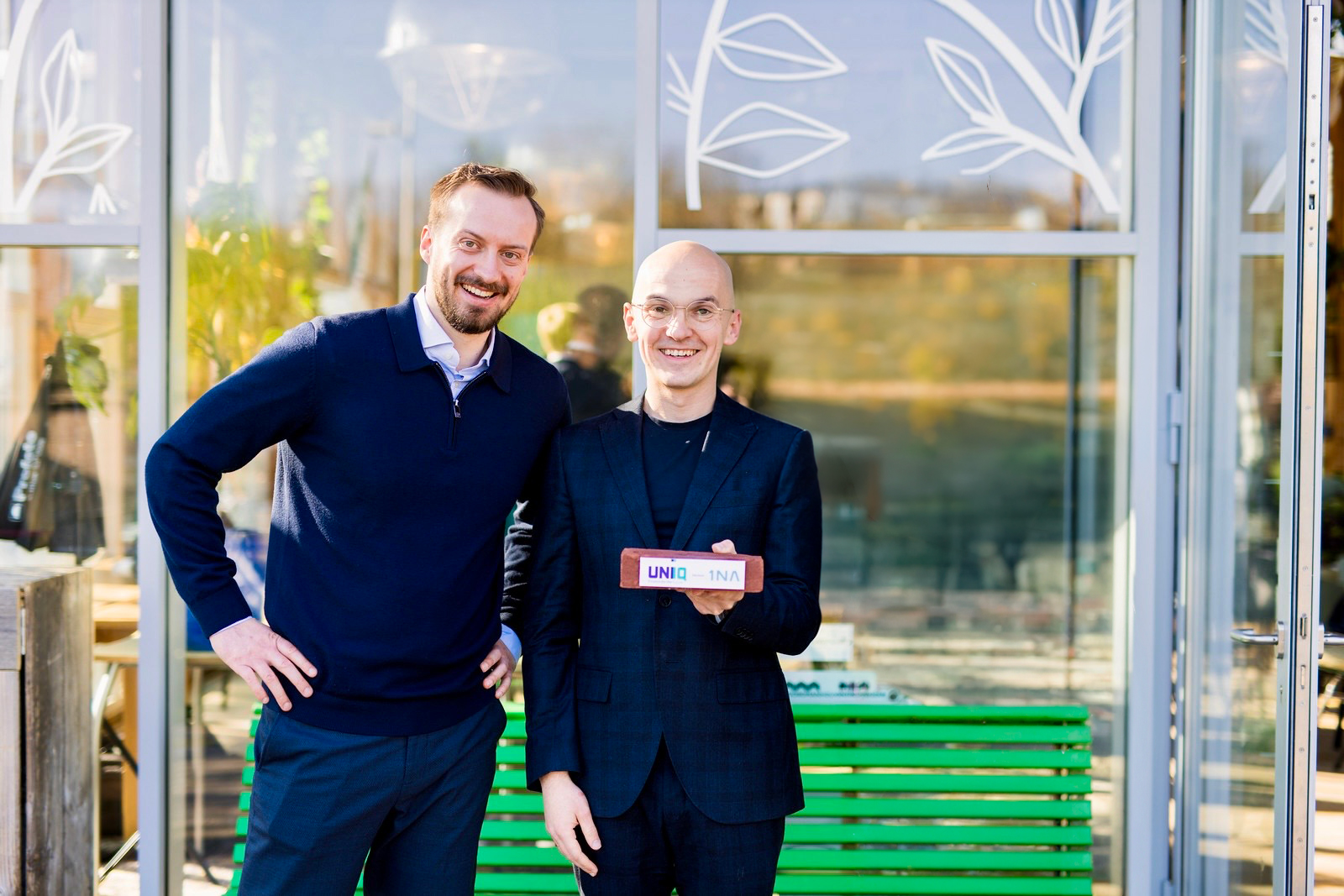
Photo - Jelle Eikelhof, Investment Manager at UNIIQ and Technology Transfer Officer at Erasmus MC, during the brick presentation of 1NA.
When speaking with both entrepreneurs and investors about the pre-seed investment landscape, the funding gap is often framed exclusively as a capital availability issue.
As someone investing in the proof-of-concept phase at UNIIQ and working to build and support academic spin-outs at the Technology Transfer Office (TTO) of Erasmus MC, I see this challenging but exciting phase from two perspectives. In my experience, funding is only part of the story. The question is not just whether enough capital exists, but whether enough uncertainty has been removed for market-driven investors to engage.
In practice, I regularly encounter innovations that are not yet investable propositions. Not because the technology is weak, but because too much is still uncertain. The market, business model, and technical feasibility are often still assumptions. However well-reasoned, assumptions alone do not constitute a credible investment case.
In my view, the challenge is not determining how much capital a startup needs, but finding out what needs to be proven to transform an idea into something investors can support.
What makes the proof-of-concept phase different
The proof-of-concept phase differs fundamentally from later stages of company building and investment, because many of the assumptions that investors later take for granted are still being validated.
In this early stage, startups are rarely ready to scale. Instead, teams are trying to answer a few fundamental questions: Does the problem truly exist, and is it urgent enough? Can the technology deliver on its promise? Is there a path towards something defensible?
At the same time, the company itself is still taking shape. Founders wear multiple hats, business models evolve, and direction changes as new insights emerge.
Traditional metrics such as revenue, traction, and growth provide limited insight at this stage. What matters is whether a team is methodically validating its core assumptions.
Why capital alone does not solve the problem
In this phase, capital alone does not necessarily move startups forward. It simply accelerates the direction that has already been chosen, whether that direction ultimately proves to be right or not.
When funding arrives without a framework for what needs to be proven, teams regularly prioritize building over validation. Activity increases, but risk does not necessarily decrease.
That is why I believe the role of pre-seed investors goes beyond funding. While hands-on investing is widely accepted in later stages, it is equally important in the proof-of-concept phase, when the proposition itself is still taking shape. It is about helping entrepreneurs structure what needs to be proven, so that each step contributes to a stronger and more investable proposition.
How we approach this at UNIIQ
At UNIIQ, this translates into a hands-on way of working that differs from what companies typically encounter in the proof-of-concept phase.
Over the past decade, UNIIQ has supported more than 100 companies and evaluates around 200 new opportunities each year. This experience helps us identify which assumptions matter most, which pitfalls tend to emerge later, and which questions follow-on investors will ask.
Our investments are organized around milestones linked to key assumptions, typically around technical validation, customer insights, and intellectual property or regulatory pathways. In practice, this also means frequent interaction. Not only through formal reporting, but through regular discussions focused on assumptions, priorities, and progress.
Our investment structures reflect the same philosophy. We keep terms simple, avoid early valuation discussions where there is not yet sufficient clarity to price risk meaningfully, and invest significant time upfront in a relatively extensive due diligence for this stage. The goal is not only to identify risks early, but also to establish the right governance, ownership, and decision-making framework while these can still be adjusted easily. This helps founders develop a focused proposition and avoids structural issues that otherwise surface in later funding rounds.
Why ecosystem integration matters
Key in this approach is our position within the innovation ecosystem in South Holland and beyond.
Many of the companies we support originate from the universities and academic medical centers that helped establish and continue to support UNIIQ. Understanding the maturity, constraints, and realistic development path of these technologies is essential to determining the right next steps.
Because we work closely with TTOs, researchers, entrepreneurs, domain experts, and investors, we are not assessing these companies from a distance. We are involved early, alongside the people who know the technology and market best.
This allows us to access expertise faster, interpret early signals more accurately, and structure progress in a way that directly supports investor readiness.
What this means for future investors
Not all pre-seed opportunities are equal. When evaluating a company at seed or series A stage, investors are also evaluating the quality of the work that was done before they became involved.
The difference is rarely the idea on its own. What matters is whether key assumptions have been systematically tested, whether the risk profile has become transparent, and whether there is a credible path towards the next milestones. Those things do not happen by accident. They are the result of deliberate and structured work during the proof-of-concept phase.
Companies that come through a rigorous proof-of-concept process arrive with tested assumptions, clearer priorities, and a more transparent risk profile. This gives later-stage investors a stronger foundation from which to focus on growth rather than fundamental validation, an approach reflected across the UNIIQ portfolio.
If this approach resonates, we invite you to browse our portfolio and see how this translates into practice.
About the author
Jelle Eikelhof is an Investment Manager at UNIIQ and works at the Technology Transfer Office of Erasmus MC. In this dual role, he supports academic spin-offs and invests in startups in the proof-of-concept phase.